Furnace Filters, MERV Ratings and Air Quality in a Dusty Valley
A higher MERV number catches smaller particles, but it is not automatically the better choice for your system.
October 6, 2026 · 3 min read
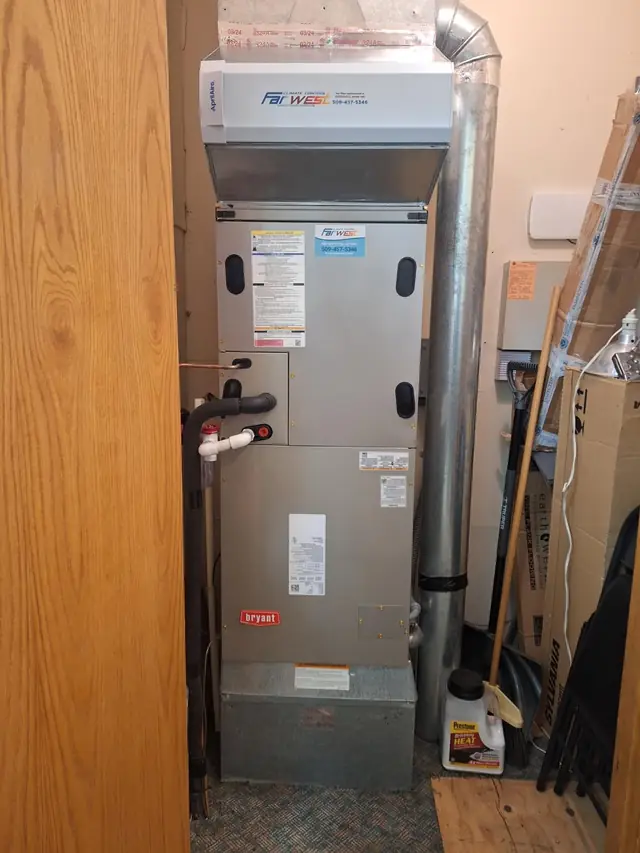
Around Yakima, the dust gets in. Orchards, fields, dry summers and the occasional smoky week all send fine particles through the valley, and a lot of it ends up in the filter that sits in your furnace or air handler. Choosing that filter looks like a ten-second decision at the hardware store. It is a little more involved than that.
What MERV means
MERV stands for Minimum Efficiency Reporting Value. It is a scale for how well a filter catches particles of different sizes, and a higher number means it catches smaller ones. A basic filter mostly protects the equipment from big debris like lint and hair. A filter with a higher rating also captures finer dust and some of the particles that bother people with allergies. That sounds like a clear win for a dusty valley, and often it is a good idea. But it comes with a catch.
Why a higher rating is not right for every system
A denser filter pushes back harder against the air. Your blower was sized for a certain amount of airflow, and a filter that restricts it too much can strain the motor, leave far rooms short of air and make the whole system work harder than it should. In a cooling system, low airflow can also let the indoor coil get too cold, which can cause ice on the coil and a string of other problems. The answer is not to avoid good filters. It is to match the filter to the system.
Thickness matters here. A deeper filter has more surface area, so it can catch more without choking the airflow the way a thin filter with the same rating might. That is why a system built with a deep media cabinet can often handle a higher-grade filter than one with a slot that only fits a 1 inch filter. Before you upgrade, find out what your system was set up for. A technician can check the airflow, and the manufacturer's documentation will say what is allowed.
The filter sizes in the Comfort Club plans
Each Farwest Comfort Club plan includes a filter, and the sizes differ from plan to plan. That tells you something useful: filter size depends on the equipment, and homes in the same neighborhood can have very different setups.
- Comfort Club: a 1 inch and 2 inch filter included
- Comfort Club Plus: a 1 inch or 2 inch filter included
- Comfort Complete: a 5 inch filter, a 4 inch filter or an Aprilaire filter included
The thick media filters in the top plan suit a house with a deeper filter cabinet. Whichever size you have, your technician can tell you which one your system takes, so you are not guessing at the store.
Changing and checking your filter
How often a filter needs changing depends on the filter, the house, pets, nearby construction and how dusty the season has been. A thin disposable filter in a busy household can look gray in a few weeks. A thick media filter may last much longer between changes. The easiest habit is to look at it once a month during the heavy heating and cooling seasons and swap it when light no longer shows through.
- Write the date on the filter frame when you install it, so you are not guessing later.
- Point the airflow arrow on the frame toward the blower, the direction the air is traveling.
- Never run the system without a filter, even for a day or two.
- Keep a spare on hand before the season starts, so a dirty filter does not wait for a store trip.
When the filter is not enough
Farwest lists indoor air quality as one of its services and says it has multiple solutions that address mold, bacteria, viruses and ventilation issues. Those are for situations where a filter alone is not the answer, such as a house that holds moisture, a family with serious sensitivities or a home that feels stuffy because it does not get fresh air. A good starting point is a conversation with someone who looks at the whole system: the filter, the ducts, the humidity and the ventilation, not a single product.
If you are not sure which filter your system should be using, call Farwest Climate Control at (509) 457-5346 or book online. A technician can check what your equipment was built for and tell you whether a better filter will help or hurt.
Farwest Climate Control, (509) 457-5346
Call (509) 457-5346More articles
Repair or Replace? How to Tell When an Old Furnace Is Finished
A furnace making a new noise does not always mean a new furnace, but sometimes it does, and the difference is worth understanding before you spend anything.
Mini Split or Duct Fix? Cooling the One Room That Never Gets Cool
A hot upstairs room does not always need a new ductless system, and sometimes a smaller fix does the job.